
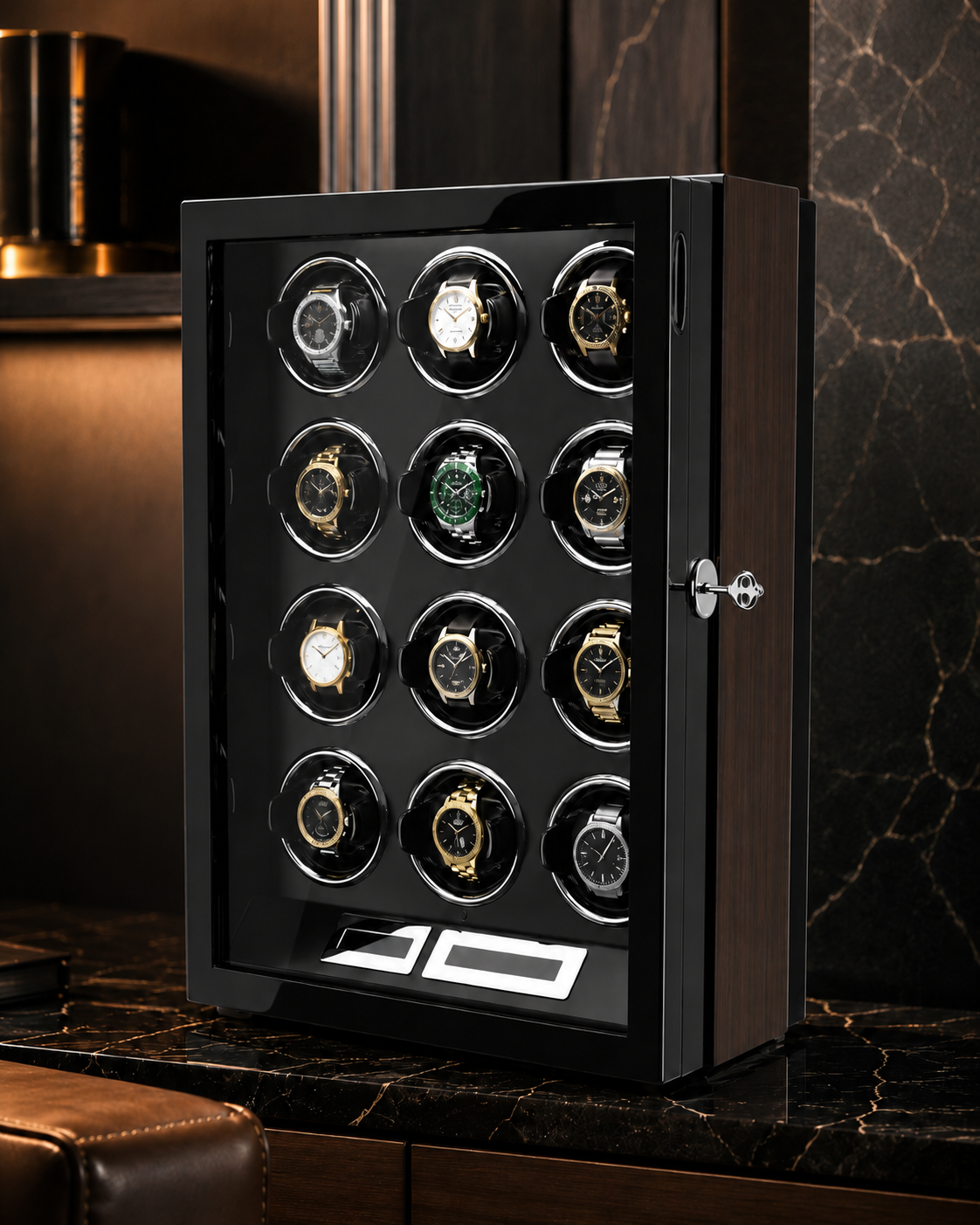
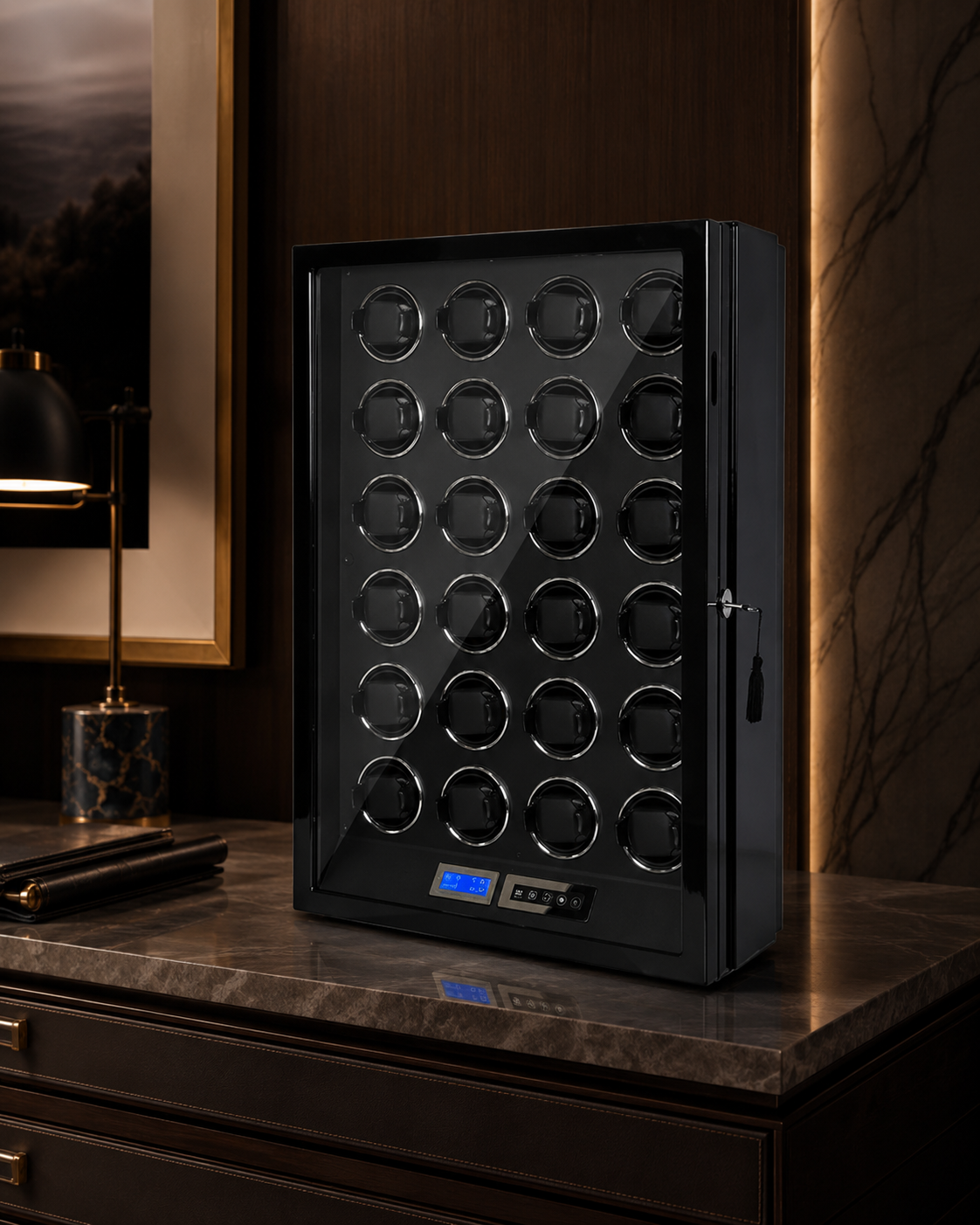
What is TPD, and why does it matter for automatic watches?
Every automatic watch movement is built around the same simple principle: a rotor swings as the wearer moves, winding the mainspring through a series of reduction gears. When the watch is worn, the rotor does the work. When it isn't, the spring slowly relaxes and the watch eventually stops.
A winder replaces the wrist. It rotates the watch on a programmed schedule that mirrors the natural movement a wearer would provide across the day. The schedule is described by two values: turns per day (TPD) and rotation direction.
Most modern automatics fall between 650 and 1 200 TPD with bi-directional rotation. The manufacturer's specifications take precedence. Robert Taylor cabinets accept independent settings per module, so a vintage manual chronograph can rest beside a modern automatic without compromise.
Too little winding and the spring relaxes too far between sessions. Too much and the slip clutch sees unnecessary load year after year. The middle is the answer — quiet, measured, on a rest cycle that more resembles a wrist than a treadmill.